
Let’s be honest: You don’t feel like one person. You feel like two.
One version of you wants to walk in sexual integrity. You pray. You read scripture. You want to be faithful—to your spouse, to your calling, to your values. You even mean it.
And then there’s the other you. The one who just. won’t. stop.
You scroll late at night. You promise you’ll quit tomorrow, “falling again” after weeks of progress. You feel powerless in the moment—like something else takes over. And when you’re finished, shame crashes in like a tidal wave.
So which version is the real you?
Did you miss Part 1? Read it here:
What If Your Porn Struggle Isn’t About Lust?
You’re Not Crazy. You’re Divided.
Internal Family Systems (IFS) therapy works from a simple yet powerful belief:
You are not one self. You are a system of “parts.”
Think of your inner world like a family. Each part of you has a role. A personality. A voice.
Some parts want to protect you. Some want to avoid pain. Some are stuck in fear. Some carry shame from your past.
In that system, porn isn’t just a random temptation. It’s a strategy—used by a part of you trying to help. Not help in a holy way. But help in a survive-the-night kind of way.
Here’s what that might look like:
The Exile Part
This is the wounded child. The part of you that feels unlovable, rejected, abandoned. The part that carries the loneliness, the shame, the fear of not being accepted. Most of the time, it hides. But it leaks. And when it leaks, the Manager takes over to make sure no one sees it.
The Manager Part
This one works hard to keep you looking okay. It’s the perfectionist. The religious overachiever or the ambitious worker who just can’t quit. The part that says, “I will do whatever it takes for people to like me.” It hates failure. Hates weakness. But deep down? It’s scared of being truly known.
The Firefighter Part
Ultimately, though, not even the manager can hide the wounds of our past. And when the manager can’t keep the problem at bay, the Firefighter jumps in. This part reacts fast. It sees pain and wants it gone. Now. So it reaches for porn to numb the shame, silence the fear, or escape the anxiety. It doesn’t care about consequences. It just wants relief.
What about the Real You?
That’s what IFS calls the Self. The calm, wise, compassionate core of who you are—the version of you that reflects the image of God.
When you’re led by your Self, you don’t need to numb pain. You can face it. You don’t need to prove your worth. You know it.
But here’s the thing:
Most of us never learned how to live from that place. We spend our days bouncing between managers and firefighters, trying to survive a world that doesn’t feel safe.
And so, the internal battle rages.

How Sin Divides the Human Soul
The Bible names this tension. Paul writes in Romans 7:19, 24-25:
“I do not do the good I want, but the evil I do not want is what I keep on doing… Who will rescue me from this body of death? Thanks be to God through Jesus Christ our Lord!”
He wasn’t being overly dramatic about a small circumstance he was going through. He was describing the divided self, something we identify with as we read.
You and I are not alone in this war between flesh and Spirit, shame and grace, fear and trust. It’s the result of sin that reigns in each of us, as Paul explained just before these verses:
“…it is no longer I who do it, but sin that dwells within me. For I know that nothing good dwells in me, that is, in my flesh. For I have the desire to do what is right, but not the ability to carry it out.”
He tells us in his letter to the Galatians that the desires of the flesh are contrary to the desires of the Spirit. They oppose one another (Gal. 5:17).
Left to ourselves, we go the way of the Manager and the Firefighter.
As Juli Slattery puts it in her book, Rethinking Sexuality,
“Why is truth so difficult to integrate into our lives? Because we all have conflicts between our natural selves and our spiritual selves. There is a part of us that wants to trust and love God, but another part of us wants to live life on our own terms. As a result, we find ourselves doing the very things we promised never to do.”
You Can’t Confess Your Way Out of Porn
That’s why Paul says we need the Holy Spirit to walk in the Spirit and not gratify the desires of the flesh (Gal 5:16, 18).
Peter reiterates this saying that the passions of the flesh “wage war against your soul” (1Pet. 2:11). John confronts the reality that all of us – regardless of our profession of faith – have sin. If we say we don’t, we are “deceiving ourselves” (1Jn. 1:8).
James doesn’t let us blame our bad behavior on circumstances or outside forces. Rather, he ties in the fact that when we don’t take our desires to God and instead seek their fulfillment in our own way, it opens the door for sin to birth and have full control of our lives. Which leads to death (Js. 1:14-15).
What does it take for something to be born?
It requires sperm to fertilize a seed that is already there.
Understand that sin is already in you. Even as the Holy Spirit comes and begins to transform us, sin lies within us.
While confession is a necessary start, it’s just the start. Even as we confess Jesus as Lord, we could at any moment begin to live out of our flesh again and let the internal parts take control.
So we must learn to identify when the Manager or Firefighter are having their way in us again so we can invite Jesus to help transform the way we respond to the parts of us that we’d rather no one see.
To quote Slattery again,
“Hiding is a part of being human in a sinful world. As children, we learned that there was an ‘acceptable me’ that people would embrace and there was an ‘unlovable me’ that would be rejected and ashamed.”
Jesus Already Knows You Fully
The good news is that Jesus doesn’t say, “Silence those bad parts.”
He says, “Bring them to me.”

When Jesus enters the system, He doesn’t kick your parts out. He sits with them. He listens. He shows them they’re safe.
The Firefighter doesn’t have to frantically put out your fire because the Manager no longer needs to hold everything together. Why? Because with Jesus, the Exile doesn’t have to hide anymore.
It’s already known. Already loved.
What If You Approached Your Porn Use with Compassion and Curiosity?
This changes how we approach healing.
Instead of asking: “Why do I keep doing this?!”
You can ask:
- “What part of me is doing this?”
- “What is it afraid of?”
- “What is it trying to protect me from?”
This shift matters. Because it lets you meet yourself with curiosity instead of shame.
Curiosity opens the door to healing. Shame slams it shut.
When you start listening to your parts, you begin to see:
- That porn isn’t the problem. It’s the medicine you’ve been trying to use.
- That your addiction is often driven by parts trying to fix a much deeper pain.
And if you want real healing, you have to deal with that pain.
How This Looks in Real Life
A couple of years ago, I was headed out the door to pick our freshly ripe peaches. As I left the house, Teresa mentioned “Be sure not to pick any ones that are still green.”
She, like me, was simply enjoying our newfound venture of growing peaches and had recently read some guidelines on when to know peaches are ripe for picking. I, however, took it as though she thought I was an idiot and didn’t know how to pick peaches.
As I processed this moment with my therapist later, I realized that:
- My Exile felt as though I once again had nothing of value to bring to the table
- My Manager, pulling its shirt collar tighter, was bound to prove that I can do it without being told how
- My Firefighter wanted to the throw the bucket out the door and head back to my den where I can control things without being disrupted
And knowing my past, if I went the way of the Firefighter, I would eventually be tempted with porn again because these kinds of events triggered it for me.
I went out and picked peaches with my kids – gritting my teeth – trying to figure out why I felt so irritated by my wife’s comment. I knew it was because her comment incidentally poked right at a childhood wound, but I wasn’t sure how to respond in a healthy way.
I had made a pattern of responding in unhealthy ways:
- The silent treatment
- Walking out of the room
- Sassing under my breath
- Outright expressing my anger at her comment
These are just preliminary gestures of my Firefighter acting out. They don’t actually fix the issue that was raging wild inside of me.
As my counselor helped me identify the different parts playing out in that moment, he invited me to lead with compassion. To give each expression space to breathe.
I could tell the Exile, “I see you. I care. You are not alone.”
I could remind the Manager, “You don’t have to work so hard. You have nothing to prove.”
And I could let the Firefighter know that I appreciate its attempt to help, but that I don’t need to numb the pain by making my wife hurt.
Because Jesus already sees. He knows. And he loves.
The Cross and the Inner Child
At the cross, Jesus doesn’t just pay your debt. He proves you’re safe.
Safe people don’t need to self-protect. Safe hearts don’t have to hide.
The gospel isn’t about erasing your parts. It’s about Jesus redeeming them—teaching each one what love feels like.
Think about it:
- The Exile can learn belonging.
- The Manager can learn humility.
- The Firefighter can learn peace.
That’s what sanctification looks like on the inside.
In Christ, you have a new center. A new core.
You don’t have to live enslaved to old parts. You can lead your inner system with the Spirit.
And when your parts get loud? You can respond with grace. You can say, “I hear you. I know you’re scared. But you don’t have to run the show anymore. Christ is with me. I’m safe. I’m not alone.”
A Simple “Parts Prayer”
Try this when the storm hits:
“Jesus, I feel divided right now.
I invite You to lead my inner world.
Show me the part that’s afraid.
Help me listen without shame.
And remind me that Your Spirit is stronger than my fear.”
Then pause. Let silence do its work.
No More Spiritual Bypassing
Here’s the danger: we often use Bible verses like duct tape—slapping them on pain so we don’t have to feel it.
That’s not actually faith. That’s fear dressed up in religion.
The gospel invites something deeper. Consider Jesus on the cross, crying out in agony and pain. Or in the Garden before when he prayed with anguish. Jesus wasn’t afraid to be real about the brokenness he felt. But like David, he brought it all to the Father.
God with us gives us the opportunity to:
- Attune: Notice the pain, the brokenness.
- Name: “I’m lonely. I’m scared.”
- Invite: “Jesus, be with me here.”
- Respond: Choose connection instead of control.
This is how he becomes more than a theory; but living, breathing Father.
Walking Toward Wholeness
Healing doesn’t happen by silencing parts of you. It happens by integrating them.
It’s the slow process of letting your whole self come under the loving leadership of Christ.
When you do, even your broken pieces begin to worship.
So the next time you catch yourself thinking, “Why can’t I stop?” Try this instead: “What part of me needs love right now?”
Because Jesus isn’t just after your behavior. He’s after your heart—every hidden, hurting corner of it.
Why Naming Your Parts Matters
If this kind of inner work feels new to you, I just finished a free 7-day journal that walks you through these practices in simple, daily prompts. It’s short, printable, gentle, and full of grace.
This journal guides you through the process that has been helping me slow down and actually hear my heart. The first prompt goes like this:
“What part of me is speaking the loudest right now?”
It’s simple. But surprisingly revealing.
Sometimes it’s the Manager trying to protect your image. Sometimes it’s the Firefighter panicking and looking for immediate relief. Sometimes it’s the Exile crying quietly in the corner.
Just naming who’s talking begins to soften the chaos inside.
When you name a part, something shifts. Instead of being dragged around by your reactions, you begin to lead them.
Naming a part gives you the chance to say:
- “I see you.”
- “I hear what you’re afraid of.”
- “You don’t have to run the show right now.”
You go from being overwhelmed by your feelings to actually shepherding them.
This is what Paul means when he talks about “walking by the Spirit.” You’re bringing your whole inner world under the loving leadership of Christ by giving him a more specific opportunity to heal you.
The journal is completely free and I’d love to send it to you. Fill out the form below and you’ll have your own digital version of it in no time.
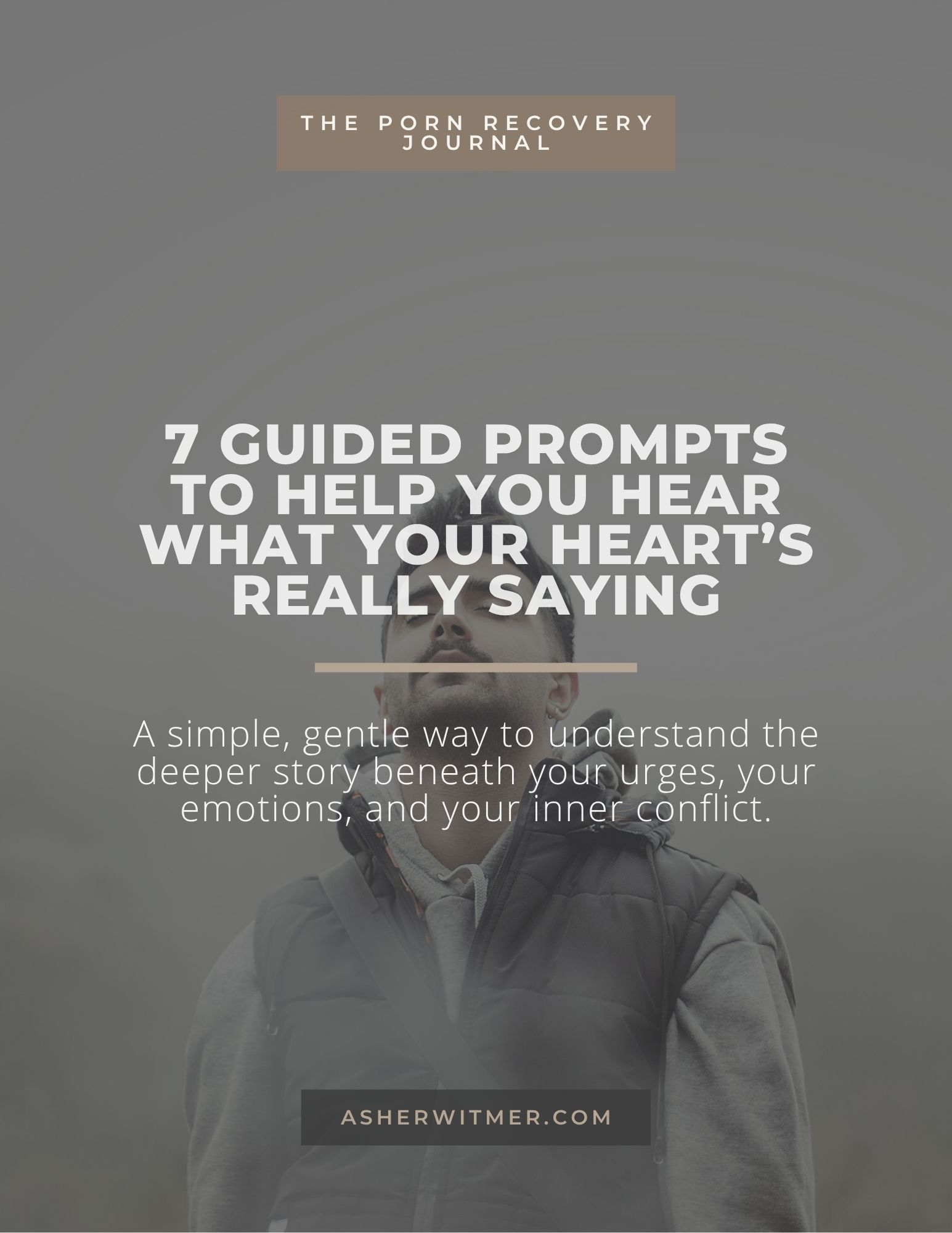
Get the Free 7-Day Porn Recovery Journal:
Next in This Series: From Fragmented to Whole
In Part 3, we’ll explore what healing looks like in practice:
- How to build new habits and neural pathways
- How to cultivate secure attachment with God and others
- How to turn relapse into relationship
You’ll see that freedom isn’t about never failing again. It’s about knowing how to return to connection when you do.
Because wholeness isn’t found in perfection. It’s found in Presence.
Question: Do you see how these parts play out in your own life? If so, type “Yes” in the comments below.
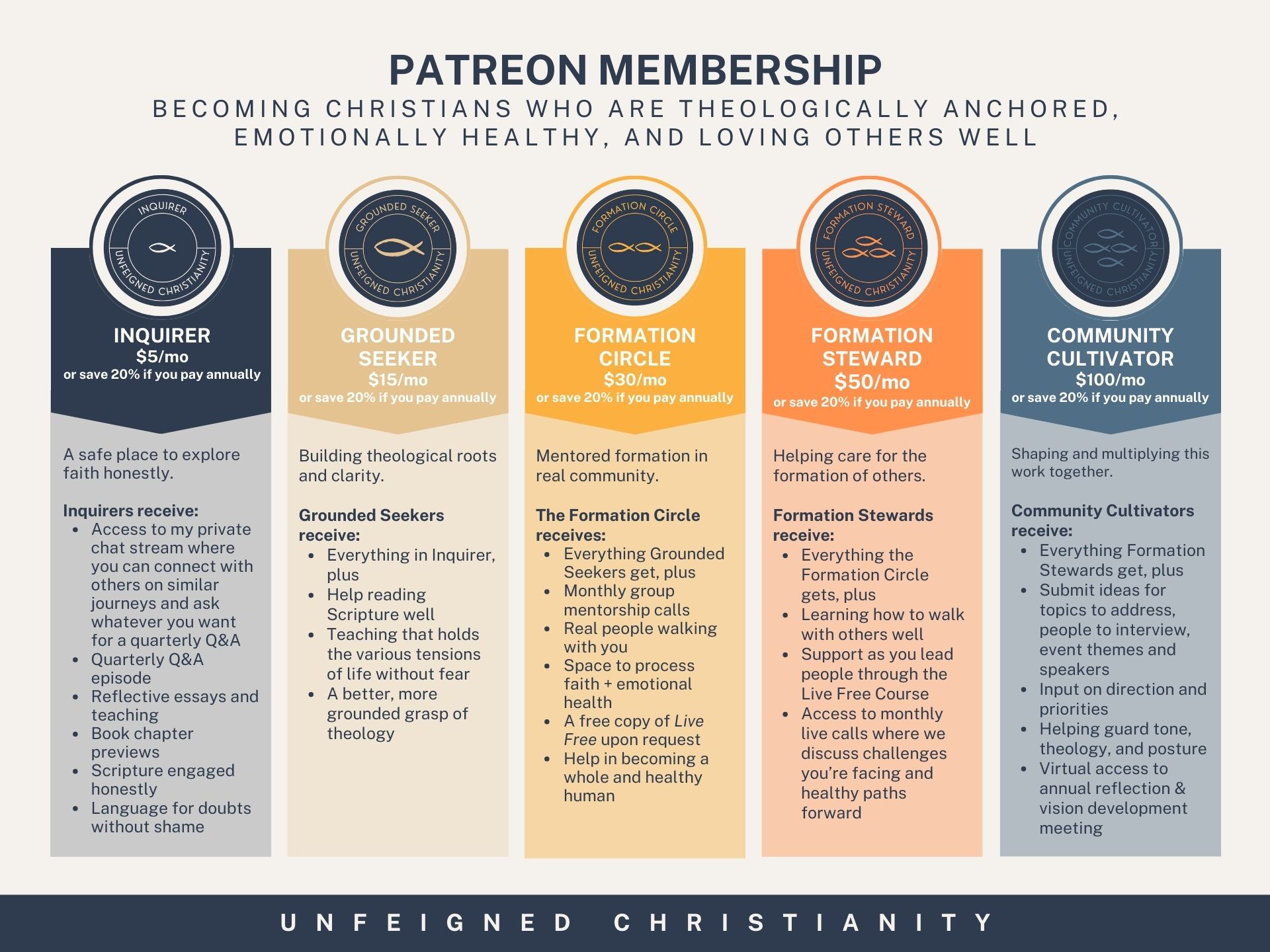
Join Unfeigned Christianity on Patreon and Take Your Journey to the Next Level.
Become a paying member of Unfeigned Christianity for as little as $5/mo and access article, our community chat stream, and quarterly Q&A episodes.
Already a member? Login