
Most of what we call discipleship in the American church is actually something else.
It's finding people who are already fairly together and fine-tuning them, offering short stint Bible studies, inviting people to a program, or hoping someone with a seminary degree shows up so we can hire them.
Jesus didn't do any of that.
He walked up to people nobody else wanted and said, follow me.
Brian Dye has spent the last 30 years trying to understand what that means — and actually do it.
Don't Have Time to Read? Here's the Gist:
Most of what we call discipleship today is just fine-tuning already stable Christians. Jesus did something different. He didn’t find impressive people—He made disciples out of ordinary, overlooked ones. Brian Dye’s life shows what that looks like: inviting people into your real life, walking with a few at a time, investing deeply for years, and helping them reproduce the same in others. The goal isn’t running a spiritual orphanage where people consume forever. It’s building a family where blessing flows through you to the next generation. Discipleship isn’t a program. It’s passing on what you’ve received.
It Started With a Carpenter
Brian grew up on the south side of Chicago. Puerto Rican and African-American neighborhood. His grandmother was the spiritual backbone of the family. His mom struggled with mental illness. His dad was an alcoholic who was present in the house but not really present, if you know what I mean.
He'd heard that God was a Father. But the only father he knew up close was a man who stepped in when you got in trouble, when your grades slipped, when you were too loud in the apartment. Stay out of his way. Don't make him mad.
He just assumed God was like that too.
Then a carpenter named Paul Terry started showing up.
Paul wasn't paid to do ministry. He wasn't trained for it. But the gospel had hit him so hard that he couldn't keep it to himself. So he just started inviting a 12-year-old kid named Brian to come along.
Saturdays, they'd volunteer somewhere. Paint someone's house. Help someone move. Brian came along. Sundays, Brian sat at Paul and his wife's dinner table. First time he ever sat at a family dinner table.
Brian had heard Ephesians 5 preached about husbands loving their wives. That was the first time he saw it.
And through Paul Terry, something shifted. He started to see God differently. Not a stern overlord waiting to catch him. A Father who wanted intimacy. Who pursued relationship.
Related Articles
What Most American Christians Settle For
Brian eventually became the recipient of this kind of discipleship from multiple people. A mentor at his local Christian community center gave him and his two best friends a list of kids' names and said, go knock on these doors. Before cell phones. Before apps. Just knock, invite, walk with.
In high school, Brian was learning how to study the Bible, teach it, and walk life with people. He just thought that's what Christians do.
The older he got, the more he realized: that is not what most Christians do.
What most American Christians do, Brian says, is stay comfortable with their own individual faith. Confess sin, attend church, serve in the nursery, pay their tithes. And that becomes the whole thing.
Not because they're bad people. But because nobody ever showed them anything different.
And Brian would argue — gently but clearly — that was never God's heart.
Find Disciples vs. Make Disciples
Another phrase that's stuck with me since I first heard Brian speak years ago: Jesus didn't call us to find disciples. He called us to make them.
Finding disciples means looking for people who are already impressive. Already spiritually hungry. Already showing up. The seminaries get raided for senior pastors. The eager guys in the front row get discipled. The people who look like they're going somewhere get invested in.
Making disciples means something different. It means finding Simon and walking with him until he becomes Peter.
Brian put it this way: everyone wants to be close to Preston Perry and Jackie Hill Perry now. Everyone wants to claim some influence. But where was that energy when Preston was 17 years old and hadn't committed his life to Jesus yet? Where was that energy when he got burned by a church that covered up a pastor's moral failure and left him with no older mentorship, no community, no one walking with him?
That's where Brian was. And that's the work that doesn't get celebrated.
The Orphanage vs. the Family
Brian uses an illustration that I haven't been able to shake.
Some orphanages do remarkable work. They give kids food, shelter, protection. They literally save lives. And that's genuinely good.
But it's not the same as a family.
A family gives you more than the basics. You get warmth. Attention. Someone who knows your name and your story and sits across from you at dinner. Someone who sees you fail and stays.
Brian says a lot of American churches are running orphanages. Good orphanages, maybe. But orphanages. People come in, receive, get fed, maybe serve in the nursery — and 20, 30, 40 years later they're still dependent on what the pastor gives them from the stage. Still receiving. Never reproducing.
And a pastor with 100 people to shepherd can only give so much. The math doesn't work.
The family model asks different questions. Not how many showed up? but who is reproducing themselves? Not did we feed them? but are they learning to feed others?
What a 3-Year Discipleship Relationship Actually Looks Like
Brian is practical. I appreciate that. He doesn't just talk about discipleship — he can describe what he actually does on a Tuesday morning.
He keeps it to 3-4 people at a time. That's it. Not because his vision is small, but because he's honest about human capacity. Jesus was full-time ministry, no wife, no kids, no other job — and he went deep with 12. If you have a spouse and kids and a job, the number should be smaller. He commits about three years to each person.
The formal piece: An early morning weekly meeting — an hour and a half or so — walking through scripture together inductively. Brian likes Ephesians. They move slowly. Three to six verses at a time. Asking questions, making observations, looking at cross-references. Accountability woven in: how's your time with the Lord? How are you loving your spouse? How are you stewarding your money?
Brian is a morning person only because he has to be. His reasoning? He needs to be in the word and prayer anyway. Why not just invite someone into his quiet time?
The informal piece: Come ride with me to the church where I'm preaching. Give me feedback on the way home. Come to dinner tonight — 6:30, nothing fancy. He and his wife have four guest rooms and have almost always had someone in transition living with them.
Here's the line that got me: We don't add disciples to our schedule. We involve them in our schedule.
That's the whole shift.
The Hebrew Context That Changes How You Read the Gospels
Brian shared something I hadn't heard framed quite this way before, and I want to pass it on.
In first-century Jewish culture, every kid started school around age 6. Their one curriculum was the scriptures — the Tanakh, what we call the Old Testament. By the time they finished what we'd call elementary school, the top students had the first five books of the Bible memorized. All of it.
The best students got selected by local rabbis to continue studying. The goal: become like the rabbi. Walk like him. Think like him. Build a family like his.
If you didn't get selected by a rabbi? You went home. Back to the family business.
Now read the gospels.
When Jesus finds his disciples fishing, at a tax booth, just going about their ordinary days — those are the kids who didn't get picked. The rabbis of the day looked at them and said, not these ones. Not good enough. Not impressive enough.
And Jesus, the rabbi of rabbis, comes and finds them and says: follow me.
That context changes everything about how we read those calls. These weren't ambitious young students eager to be disciples. These were rejects. And Jesus chose them anyway.
That's who Brian is looking for. That's who the church should be looking for.
Blessing Is Meant to Flow Through You
Brian ended our conversation with something simple that I keep coming back to.
Blessing is meant to flow through us, not stay with us.
The faith he received from his grandmother, from Paul Terry, from a mentor named Dave who handed him a list of names and said go knock on doors — none of that was meant to stop with him. It was always meant to keep moving.
That's discipleship. Not a program. Not a conference. Not a six-week study. Just one person, walking with another person, passing on what they've received, until it reaches the next generation and the one after that.
Wherever you are. Whatever you know. Even if all you've got is John 3:16.
Pass it on.
What Stood Out To You?
Listen to the full conversation with Brian on the Unfeigned Christianity Podcast.
What do you find most challenging about making disciples? You can share in the 0 Comments below.
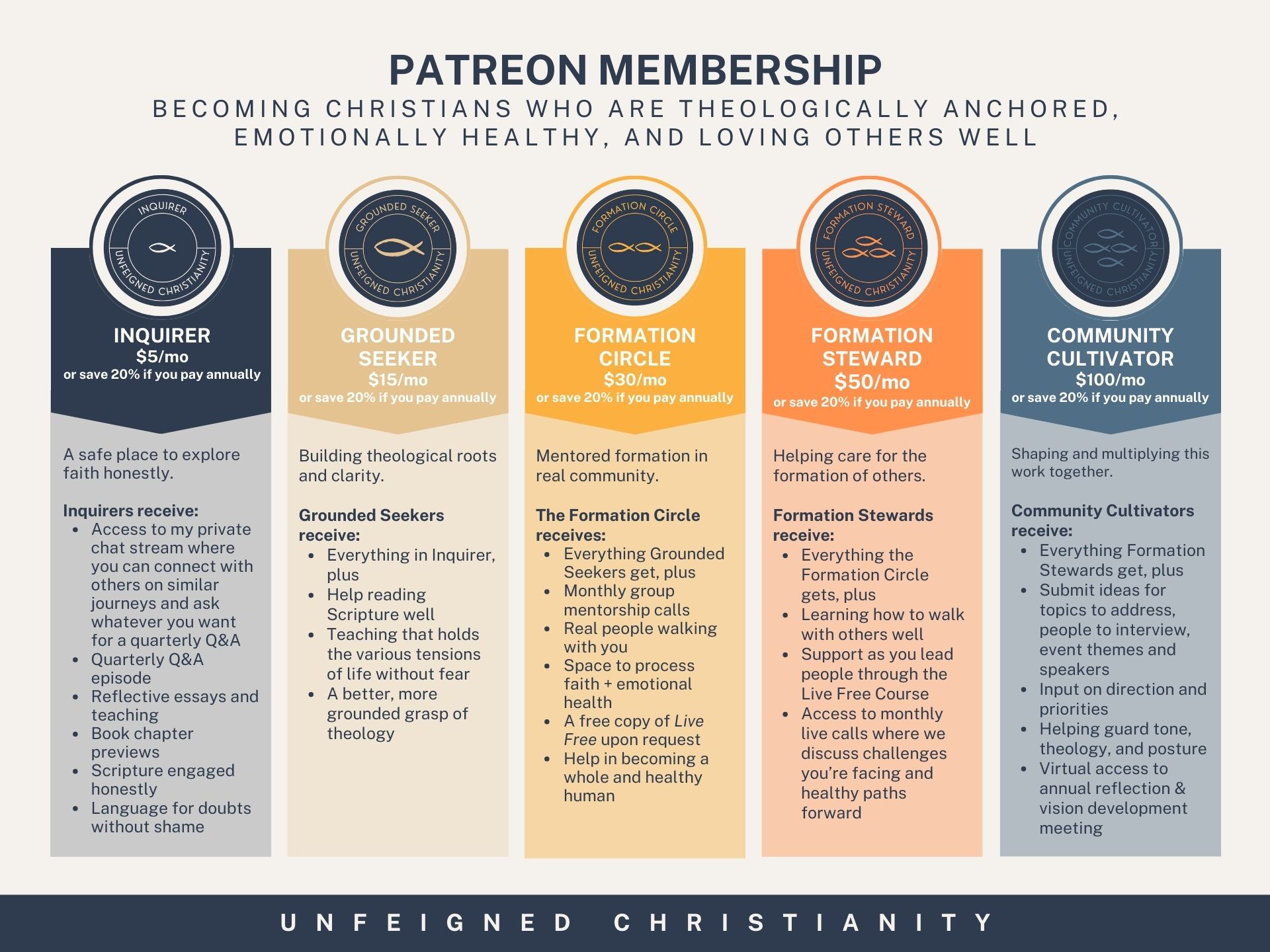
Join Unfeigned Christianity on Patreon and Take Your Journey to the Next Level.
Become a paying member of Unfeigned Christianity for as little as $5/mo and access article, our community chat stream, and quarterly Q&A episodes.
Already a member? Login