

There's a version of the "inner city teacher" story that ends up on Netflix.
You know the one. Passionate young teacher. Rough school. Resistant kids. Dramatic turning point. Standing ovation at graduation.
My sister Carita's story doesn't look like that.
It looks like 10 years of showing up. Grading writing she doesn't enjoy grading. Learning to question whether demanding eye contact is actually respectful. Watching immigrant families trust a school that doesn't culturally look anything like them. And slowly — quietly — coming to understand things about the gospel she couldn't have learned anywhere else.
I've watched her journey from a distance for years. This time I finally sat down and asked her about it.
Don't Have Time to Read? Here's the Gist:
Rather than a dramatic "success story," Carita’s decade in the classroom is a study in cultural humility and the practical gospel. She argues that teaching in a diverse, inner-city environment requires unlearning "Western" assumptions about respect (like demanding eye contact) and recognizing that "church kids" need Jesus just as much as those from unchurched backgrounds.
Key Takeaways
- Beyond the "Hero" Narrative: Real impact isn't a 90-minute movie; it’s 10 years of "showing up" and grading papers you don’t want to grade.
- Respect as a Two-Way Street: Carita learned to question her own cultural defaults. For example, she stopped demanding eye contact after realizing that, in some cultures, looking away is actually a sign of submission to authority.
- The "Why" of Dignity: While public school curricula teach kindness and self-worth, Carita found they lack a foundation. She views the Gospel (being made in the image of God) as the essential "why" behind human dignity.
- Acknowledging Invisible Privilege: She highlights "community privilege"—the ease with which she found a job and housing through her Mennonite network—which many of her students' families lack, regardless of their work ethic.
- The Level Playing Field: Her biggest lesson? Everyone needs grace. Being "raised in the church" doesn't make a teacher a hero reaching down; it just means they are walking alongside their students as fellow people in need of Jesus.
How She Got There
Carita didn't grow up dreaming of the city. She grew up in a small-town Mennonite family — the same one I grew up in — where the biggest bold move was playing sports at a public school.
But somewhere in high school, a story caught her attention. A woman teaching cross-culturally in southern Texas. Kids from unchurched homes. A public school. And a teacher who found ways to bring light into it.
That story stuck.
Over the years, a lot of small things started pointing the same direction. A clipping from a job listing at a school in New York City that she carried in her Bible for two years. A summer in Flint, Michigan. Our family eventually moving to Los Angeles.
She wanted to teach. She wanted to be in the city. And she wanted to work with kids who didn't have easy access to what a lot of us take for granted.
A handful of false starts later — ESL teaching that didn't fit, substitute preschool teaching that didn't last, a degree path that didn't have the track she needed — she landed at Way of Jesus Academy in Lancaster City, PA.
That was 10 years ago.
Related Articles
The Gap Nobody Talks About
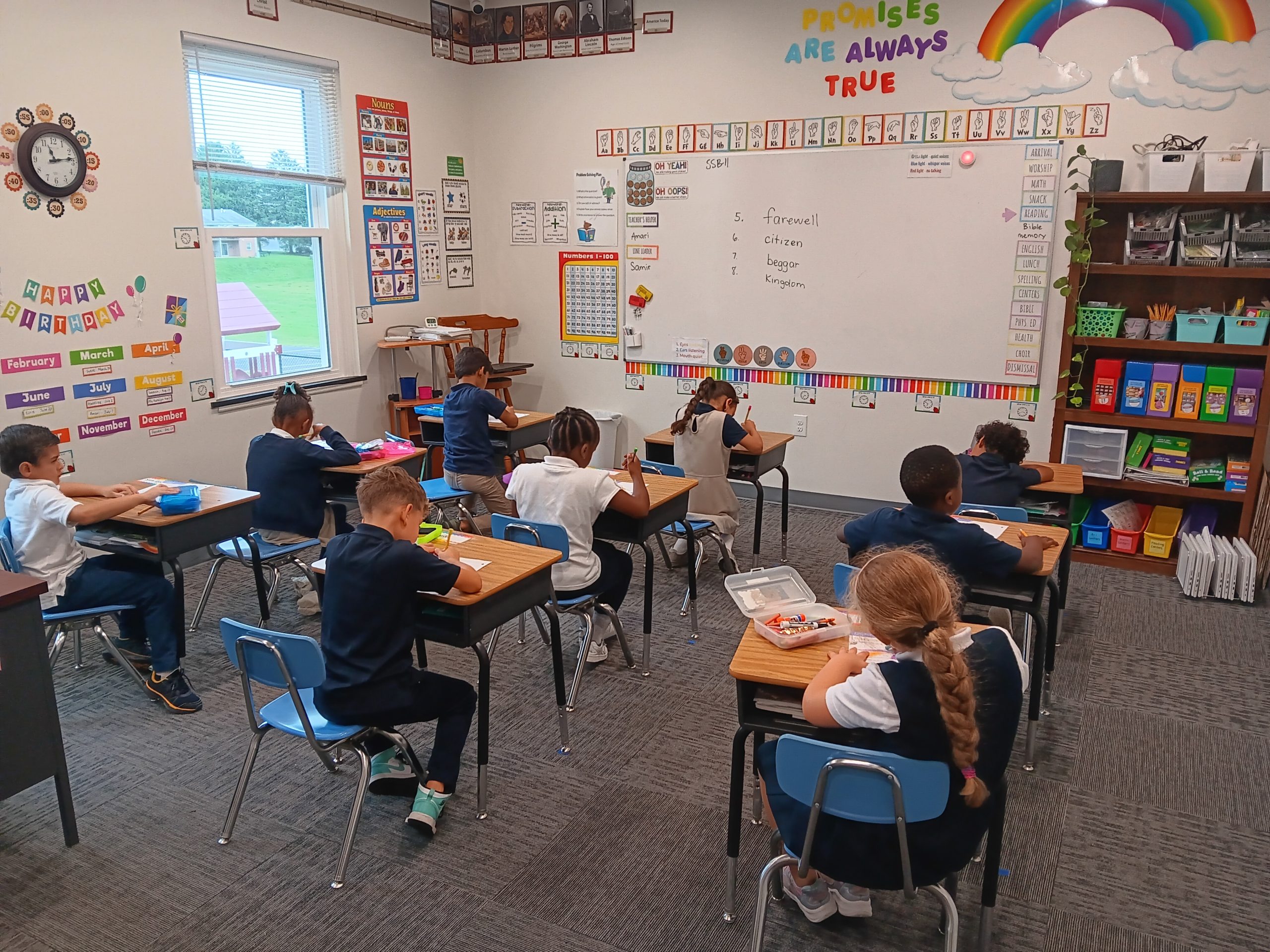
Something that stands out to me is that the entire faculty at Way of Jesus is white. And mostly Anabaptist.
The student body? Roughly half are not.
Kids from immigrant families. Hispanic, Asian, African, African-American. Different faith backgrounds. Different cultures. Different ways of relating to authority figures.
I asked Carita how that dynamic gets navigated. She didn't pretend it's easy. But she said something that stuck with me.
"Respect goes two ways. They are children. But they were also made in the image of God. And that means they deserve my respect too."
That's not a talking point. That's 10 years of getting it wrong sometimes and paying attention.
One example: for most of us who grew up in Western, church-going homes, making eye contact with an authority figure is a sign of respect. It's expected. Sometimes demanded.
But in some cultures — and for some kids on the autism spectrum — eye contact with someone in authority is actually disrespectful. It signals a refusal to submit.
Carita said she's become far more hesitant to demand eye contact as a result. Not because she's abandoned her role as the teacher. But because she's learned that what looks like disrespect sometimes isn't.
That's discipleship. That's the gospel in practice. Slowing down enough to ask whether your default is actually right.
What Public School Taught Her About Christian Education
For her master's degree, Carita did student teaching in a public school. First grade. She was handed the morning meeting and social-emotional learning curriculum on basically day one.
She actually enjoyed it. The content was solid. Treat others with kindness. Know your own worth. Speak respectfully to yourself and your classmates.
But partway through the semester, something nagged at her.
Why should you believe in your own worth? Why should you treat that kid across from you with dignity?
The curriculum had no answer. It assumed the conclusion without giving any foundation for it.
Carita knew the answer. She just wasn't allowed to say it out loud: because God made you. You bear his image. And so does the kid next to you.
That realization has shaped how she teaches Bible in her current classroom. It's not a subject bolted onto the side of an otherwise normal school day. It's the reason the whole thing makes sense.
"We All Need Jesus — Even the Church Kids"
This was probably my favorite part of the conversation.
At some point I asked Carita what she's had to unlearn in 10 years of working with kids from different backgrounds and faith traditions.
She didn't say what I expected. She didn't go straight to cultural humility or implicit bias or any of the things you might predict.
She said:
"We all need Jesus. And some of the people who most need to hear that are the ones who go to church every Sunday."
Growing up in a Christian home, getting trained in ministry, knowing all the right language — none of it makes us less in need of grace. If anything, it makes us more susceptible to assuming we've arrived somewhere. That we're reaching down to pull others up rather than walking alongside them.
That posture — the hero swooping in — doesn't hold up inside a classroom of kids who can smell inauthenticity from across the room.
What holds up is coming in as someone who also needs Jesus. Every day. All the time.
The Privilege Hidden in Plain Sight
Carita said something near the end of our conversation that I want to quote as closely as I can: when she moved to Pennsylvania, she arrived knowing barely anyone, with barely enough money for a month of living. But within days she had a job, an apartment to look at, and a car to borrow. Because she knew one person who knew another person who happened to be Anabaptist.
That's privilege.
Not the kind that gets talked about in most political conversations. Not wealth. Not connections to powerful institutions. Just a community that takes care of its own. A network of trust built through shared faith and shared history.
It's a beautiful thing. And it's also something a lot of the families in her school don't have.
They don't have someone who can make one call and get them a job or an apartment or a car. And it's not because they're lazy or making bad decisions. It's because they don't have the network.
Understanding that doesn't mean falling into pity or guilt. It means adjusting your judgment — and your generosity.
Long Faithfulness
At the end of the interview, I told Carita what I've noticed from the outside: she reads, she goes to conferences, she has hard conversations, she's constantly learning. Not to build a platform. Not to become an expert. Just to love the kids in front of her a little better every year.
That's the kind of faithfulness that doesn't necessarily make a Netflix documentary.
But I'd argue it does more kingdom work than most of the stuff that does.
What Stood Out To You?
Listen to the full conversation with Carita on the Unfeigned Christianity Podcast.
What did you take away from the conversation that will impact how you love others? You can share in the comments below.
Join Unfeigned Christianity on Patreon and Take Your Journey to the Next Level.
Become a paying member of Unfeigned Christianity for as little as $5/mo and access article, our community chat stream, and quarterly Q&A episodes.
Already a member? Login