
By the end of 2024, I genuinely didn’t think I’d ever write or podcast again.
I wasn’t sure it was worth it.
Not only had I recently recovered from a viral infection getting into my central nervous system, but I wasn’t sure this kind of work was worth the cost. So much of Christianity in America has become tainted by one’s political preferences. If someone challenges another—even when anchored in scripture—people tend to respond with ad hominem attacks and other forms of “christian vitriol.”
I needed space. Space to breathe. To figure out if this was even sustainable, let alone meaningful.
And honestly? I wasn’t convinced that it was.
But as 2025 began, something started stirring in me. A quiet reawakening. Like my soul finally came up for air. It’s not as though I figured out how to solve the problems we face among Christian discourse. But I started to sense clarity.
When I thought about never writing again, a couple of things kept burdening me. It all came back to why I started this work in the first place. This awakening reminded me of what really matters and why this work is still worth doing.
Here’s what emerged:
Every piece of content I create moving forward—every book, podcast, blog post, video, or course—will be shaped by three goals. I want to help equip God’s people in:
- Becoming theologically anchored
- Becoming emotionally and spiritually healthy
- Loving and discipling others well
Don’t Have Time to Read? Here’s a Summary
After stepping back from writing and podcasting in 2024 due to a personal health crisis, I’ve spent the last several months rethinking what really matters in my work. Three core pillars have emerged:
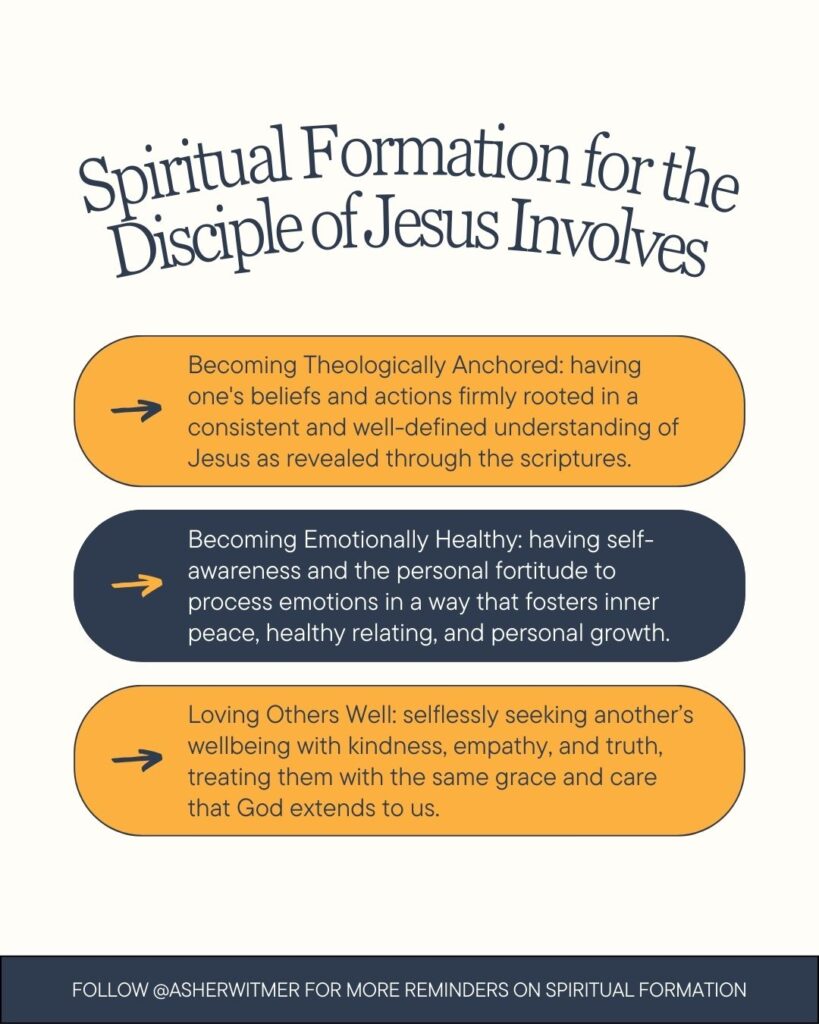
- Being theologically anchored – having one’s beliefs and actions firmly rooted in a consistent and well-defined understanding of Jesus as revealed through the Scriptures.
- Being emotionally and spiritually healthy – having self-awareness and the personal fortitude to process emotions in a way that fosters inner peace, healthy relating, and personal growth.
- Loving and discipling others well – selflessly seeking another’s wellbeing through kindness, empathy, and truth, treating them with the same grace and care that God extends to us.
Everything I write, record, or share going forward will flow from these three pillars. If you care about growing in them too, I invite you to walk this journey with me.
1. Becoming Theologically Anchored
When I say “theologically anchored,” I don’t mean having an answer for every debate.
I don’t mean being able to quote Greek verbs from memory or writing 40-page position papers on Calvinism vs. Arminianism.
What I mean is this:
Having one’s beliefs and actions firmly rooted in a consistent and well-defined understanding of Jesus as revealed through the Scriptures.
Why do I start here?
Because if we don’t ground the way we look at the world and the way we live our lives in the person and character of Jesus, we become like the world. Emotionally. Politically. Doctrinally. We’ll twist scripture to fit the way we want things to be instead of conforming our wants to the nature and person of Jesus.
I’ve seen this in myself.
Growing up in the church, I’ve always had a decent head-knowledge of the Bible. I knew the “right answers.” But when it came to living out the way of Jesus in everyday life, it got messy. I could argue for why God exists, but viewed the Pakistani family in town as a threat. I had scripture for why a married couple should never get divorced, but also had a belief about gender roles that centered man as the hero of the story.
I knew my Bible, but had failed to become the kind of person it desires to create.
And that’s not just a personal problem. It’s A Church-Wide Problem.
In the circles I come from—conservative Anabaptist churches—we can tend to avoid theological development and articulation because we’re afraid of division. But in doing so, we end up with a shallow faith that can’t weather conflict, cultural change, or deep doubt.
We say we’re “just following Jesus,” but we haven’t done the work of really understanding who Jesus is and who he’s inviting us to become.
Being theologically anchored doesn’t mean having it all figured out. It means knowing who your foundation is. It means coming back to Jesus—his life, his teachings, his heart—as the lens through which we view everything.
Marriage. Family. Vocation. Race. Sexuality. Even politics.
When we are theologically anchored, we begin looking more and more like Jesus.
2. Becoming Emotionally and Spiritually Healthy
This one hits even closer to home.
I’m a 34-year-old husband, dad, and church leader. And I only started taking my mental health seriously in the last two years. Before that, I would’ve told you I was doing “fine” even when I wasn’t. It wasn’t until I was blindsided by a crisis that I realized I in fact wasn’t fine and reached out for help.
I went through a mysterious health issue where did not find answers for a number of months. In the waiting, everything I had been doing came to a halt. During this season, a bunch of emotional junk began to rise to the surface—some of it stuff I thought I had taken care of.
My inner world was not as centered and grounded as I had thought. I faced intense negative thoughts that seemed far more real than biblical truth I had memorized. Darkness overwhelm me and I felt all alone.
In those moments, all the “right theology” in the world didn’t help. The issue wasn’t a matter of lacking right belief. The issue was that I found myself experiencing emotions I wasn’t how to handle. I hadn’t learned to wholly integrate my theology with my body and emotions.
This is what I mean by emotional and spiritual health:
Having self-awareness and the personal fortitude to process emotions in a way that fosters inner peace, healthy relating, and personal growth.
This is’t about feeling “positive vibes.” It’s not self-help or psychology replacing theology. It’s about wholeness.
Jesus didn’t just come to forgive our sins. He came to make us whole. And that includes knowing what to do with our difficult emotions.
But here’s the problem—perhaps especially for men and especially for spiritual leaders—we’ve been taught to ignore our emotions. To muscle through. To preach peace and unity with each other even if we’re raging inside. We’ve been taught to tell others God loves them while secretly wondering if we’re lovable ourselves.
That’s not wholeness. That’s spiritual bypassing.
And it shows up in all kinds of ways:
- We lash out at our spouse instead of owning our wounds.
- We lead with control instead of compassion (in fact, compassion feels threatening).
- We bury shame in various kinds of addictions and say, “we struggle with ____.”
- We avoid counseling because “God is enough”—but forget that God often heals through people.
If we want to love others and disciple others well, we have to start by getting honest with what’s happening inside of us and pursuing wholeness ourselves.
3. Loving and Discipling Others Well
If we are not theologically anchored and emotionally healthy, we cannot love others well.
Theology is the root. Emotional health is the soil. But love is the fruit.
And I don’t mean some vague, feel-good love. I mean what Jesus embodied:
Selflessly seeking another’s wellbeing through kindness, empathy, and truth, treating them with the same grace and care that God extends to us.
In good, Christian lingo we call this discipleship.
This isn’t about agreeing with everyone. It doesn’t mean you avoid hard conversations. Rather, it means you hold truth and grace together. You speak honestly. You listen deeply. You see the person across from you as someone made in the image of God.
Even when they vote differently than you, when they post something offensive online or trigger your trauma and disagree with your theology.
During the last Presidential elections, we had one neighbor flying a Biden/Harris flag and another with a Gadsden flag: “Don’t Tread on Me.”
Every time we walked around the block, I felt the tension. Not because I was worried they’d argue with me. But because I was wrestling inside:
“What does it look like to love both of these neighbors well? Not just tolerate them. But love them in a way that points to Jesus?”
That question has shaped how I approach discipleship, how I talk about politics, or even how I engage online.
Truth is, the stuff that gets people stirred up—race, sexuality, power, politics—is often the stuff that exposes whether we really know how to love people or not.
Some folks have told me, “Asher, I wish you wouldn’t talk about race or politics. Just stick to the gospel.”
But here’s the thing: If the gospel doesn’t shape how we talk about race and politics and sexuality, then what exactly is it doing? If our “gospel” doesn’t speak to all areas of life then it’s not actually good news.
Jesus doesn’t call us to silence. He calls us to love. And love is always personal. Always embodied. Always relational.
Sometimes that love looks like listening when I’d rather defend or standing up when I’d rather shrink back. Sometimes it looks like telling someone the hard truth—gently, but clearly.
But in every case, it looks like grace. It looks like Jesus.
Why This Matters for My Work (and Maybe Yours)
I started blogging over twelve years ago. Eventually, I wrote a book, launched a podcast, and built a course.
But for much of that time, I felt scattered. Like I was responding to the moment, but not rooted in a clear direction.
That changed this year.
I’m not narrowing my content to one topic. I’m not chasing engagement or trying to keep everyone happy. I’ve given up on that a long time ago.
What I am doing is committing to this:
If it’s on my blog, podcast, or social media channels, it’s being shared from this posture:
- Will this help us become more theologically anchored?
- Will this help us grow in emotional and spiritual health?
- Will this help us love and disciple others better?
If the answer is no, I’m not publishing it.
And if you’re someone who just wants feel-good content… or wants a voice that always agrees with your worldview… or just want to see what juicy controversy Asher is stirring up today… you might not want to follow my work.
But if you’re hungry to be rooted in Jesus, whole in your inner world, and genuine in the way you love others—even the ones you disagree with—then welcome. You’re not alone.
We’re on this journey together.
Question: Was there a line in this article that made you pause or reread? You can share in the comments below.
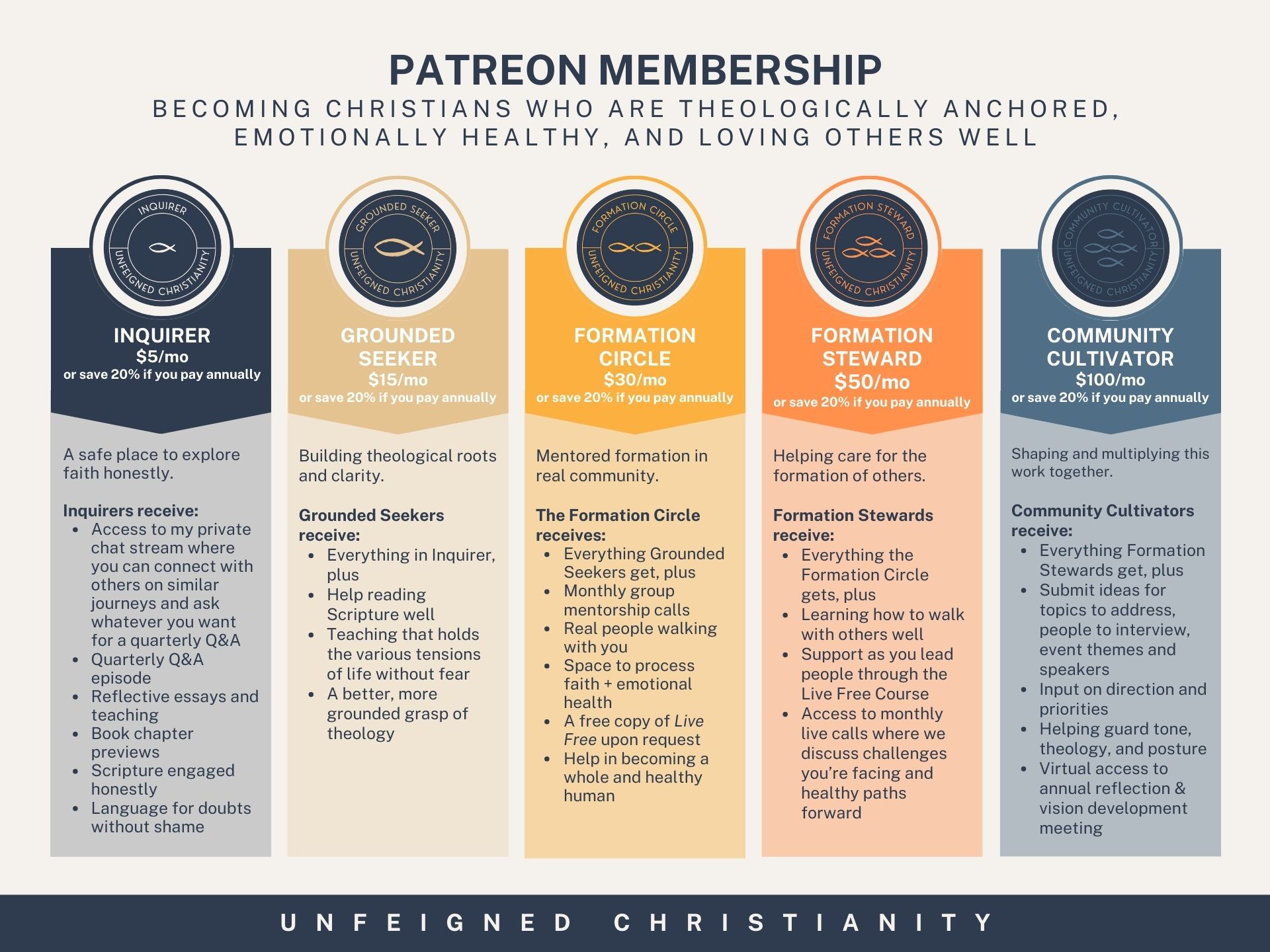
Join Unfeigned Christianity on Patreon and Take Your Journey to the Next Level.
Become a paying member of Unfeigned Christianity for as little as $5/mo and access article, our community chat stream, and quarterly Q&A episodes.
Already a member? Login