
So far, we’ve uncovered two huge truths:
- Porn isn’t just about lust. It’s often about pain.
- And the internal war you feel doesn’t mean you’re fake. It means you’re human.
But now what? How do you actually begin to heal? How do you rewire the old pathways in your brain or how do you move forward when you keep falling backward?
Let’s talk about the process.Because freedom isn’t just possible. It’s real. And it happens one step at a time.
1. Make Space for Your Parts
Remember those parts we talked about in Part 2? The exile, the manager, the firefighter?
They don’t just disappear overnight. And they won’t change by force.
You can’t yell them into holiness. You can’t shame them into silence or Bible-verse them into submission.
They soften when they feel seen.
They shift when they feel safe.
So instead of pushing them away, we invite them to speak.
Ask yourself:
- What part of me is showing up right now?
- What is it afraid of?
- What would it say if I let it speak?
Then go even deeper:
- What does this part need?
- What truth might it need to hear?
This is called unblending. It’s you stepping out of the panic and into leadership of yourself.
And here’s the beautiful twist: You don’t have to lead alone. You lead with Jesus. It’s what Scripture calls walking in the Spirit.
You invite Him into the conversation and let the Spirit guide how you talk to your inner self. You don’t shove parts away. You shepherd them.
2. Heal the Wounds Beneath the Habit
Porn is rarely the problem in and of itself.
It’s a superficial solution to a deeper wound. So what’s beneath your pattern? What pain has your brain learned to soothe with porn?
Often, it’s one of these:
- Loneliness
- Shame
- Fear of failure
- Abandonment
- Childhood attachment wounds
- Emotional neglect
- Anxiety
- Unprocessed trauma
None of these are small. None of them heal by ignoring them.
Ask Jesus, gently:
“Where did this start? What younger version of me is hurting here?”
Let Him show you the younger you who felt unwanted. The teenager who felt unacceptible. The young adult who learned to cope instead of connect.
Some of this work requires help:
- A trauma-informed Christian counselor
- A group of men who can hold tenderness and truth
- A mentor who won’t flinch at your story
Healing happens when your wounds finally hear someone say:
“I see you. I’m not ashamed of you. You don’t have to carry this alone.”
That’s how the Exile begins to trust again and is able to take the next step in forgiving the offender.

3. Rewire Your Brain Through New Habits
This is the hopeful part of neuroscience: Your brain can change.
Neuroplasticity means that even if you’ve conditioned your brain to turn to porn for years, you can re-condition it. But it takes repetition. And grace.
Here’s what helps:
- Deliberate abstinence from porn (and usually masturbation)
- Replacing triggers with connection or movement
- Daily practices that downshift your nervous system
- Journaling your internal parts and inviting Jesus to speak His truth over them
- Spiritual rhythms that calm, not shame
- Relational support
These new habits slowly build new neural pathways. The goal isn’t to make temptation disappear. It’s to change your automatic response when it shows up.
Freedom isn’t the absence of struggle. It’s leaning on the presence of Jesus in the midst of the struggle.
4. Cultivate Secure Attachment
Remember the attachment theory piece from Part 1? Here’s where it comes full circle.
Porn often takes root in a heart that doesn’t feel safe in relationships. So one of the best ways to uproot it is to learn what real connection feels like.
- Spend time with safe people.
- Let others see the real you.
- Practice asking for what you need.
- Be honest about your story.
And most importantly? Let God become your secure attachment.
Not just the God you serve from a distance. But the One you can trust, talk to, cry with, rest in. He is the God who actually is gentle, present, unhurried, and near.
He’s not waiting for you to “get it together.” He’s sitting with you while you don’t have it together inviting you to cast it all on him.
The gospel isn’t just about forgiving your behavior. It’s about restoring your heart so you can live out new and healthy behaviors.
5. Reframe Setbacks as Opportunities
You will have setbacks. Not because you’re defective. Because you’re human.
But here’s what changes everything:
A setback isn’t the end of the journey. It’s information for the journey.
When you stumble, ask:
- What was I feeling beforehand?
- Which part took over?
- What did that part need?
- How can I respond differently next time?
Stop thinking “I failed.” Start thinking, “Something inside me needs attention.”
This is what it means to live in repentance and grace as we reintegrate ourselves to who God designed us to be.
Healing Is Slow… But It’s Sure
You aren’t trying to become someone else. You’re learning to become your whole self as God made before sin took over. It’s the self the Spirit is restoring. The self that no longer lives fragmented and afraid.
Freedom doesn’t mean the Firefighter never speaks again. It means he stops driving the car.
Freedom doesn’t mean the Manager stops caring. It means he finally rests.
Freedom doesn’t mean the Exile never aches again. It means he doesn’t try to heal that ache on his own.
This is what wholeness looks like.
Not perfection, but integration.
And Jesus is in every step of it.
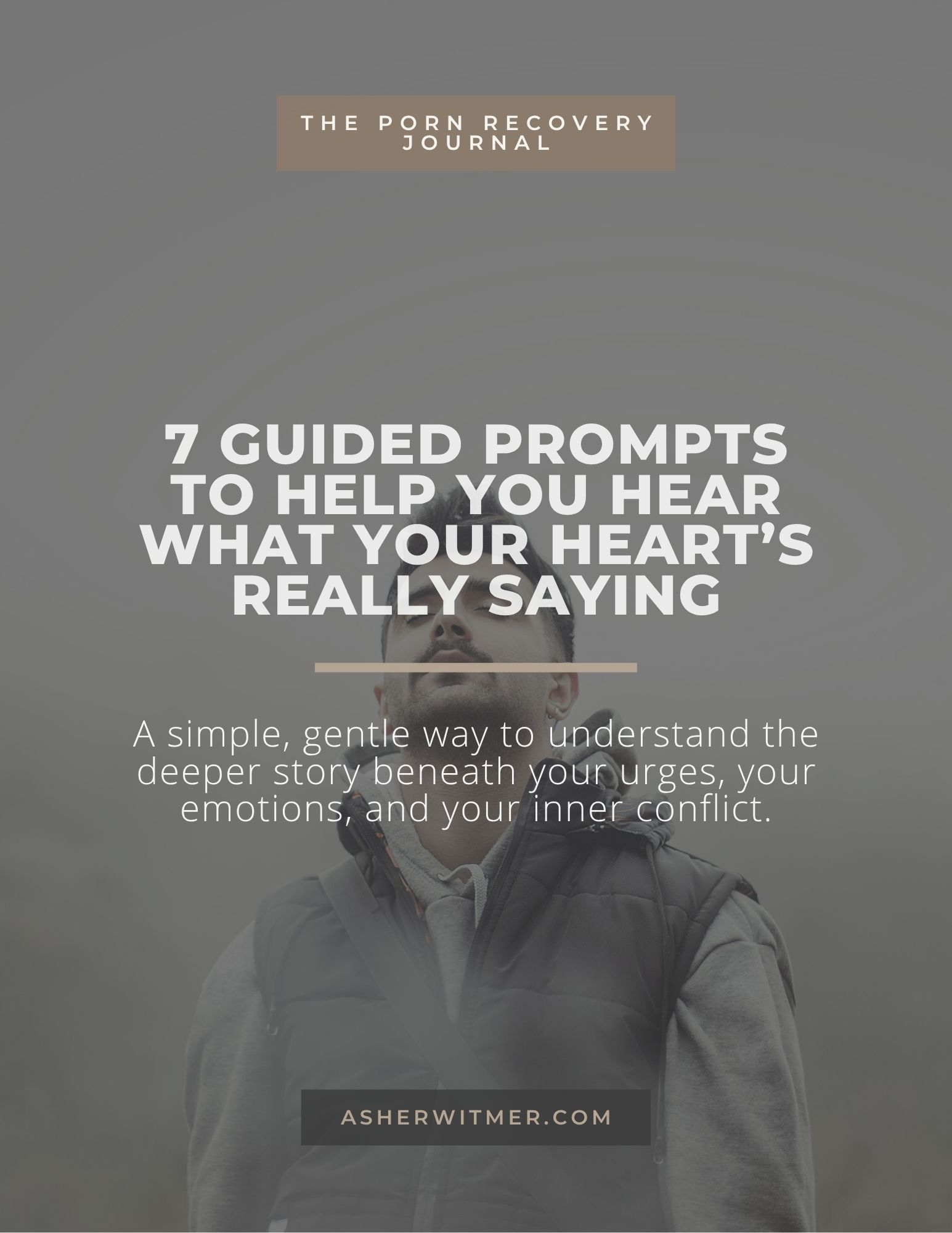
Get the Free 7-Day Porn Recovery Journal:
An Invitation to Heal in Community
If you’re reading this and thinking, “I don’t want to walk this path alone,” you’re not supposed to.
Over the years, men have told me the same thing:
“I want deeper healing. I want to understand my story. But I don’t know where to start.”
That’s why I built The Live Free Mentorship Community.
It’s a place to:
- learn these inner dynamics in practical ways
- process your story with other men walking the same road
- get access to coaching
- heal in community, not isolation
- work through The Live Free Course with support, guidance, and clarity
Inside, we don’t just focus on stopping a behavior. We focus on becoming whole—emotionally, spiritually, relationally.
Enrollment will be opening again soon.
If you want to be part of the next cohort—or if you’ve been waiting for a sign—this might be it.
I’d love to walk with you.
Final Thoughts
Healing from porn isn’t about grit or shame or white-knuckling your way through temptation. It’s about learning to live connected—to God, to others, and to the parts inside you.
It’s about love. Honesty. Presence. Repetition. Compassion. And Christ.
You don’t need to be perfect to start. You just need to be willing.
And remember:
Freedom isn’t found in a flawless record. It’s found in the connection and compassion of Jesus Christ.
Question: What’s the biggest obstacle you’re facing in your journey toward sexual wholeness right now. You can share in the comments below.
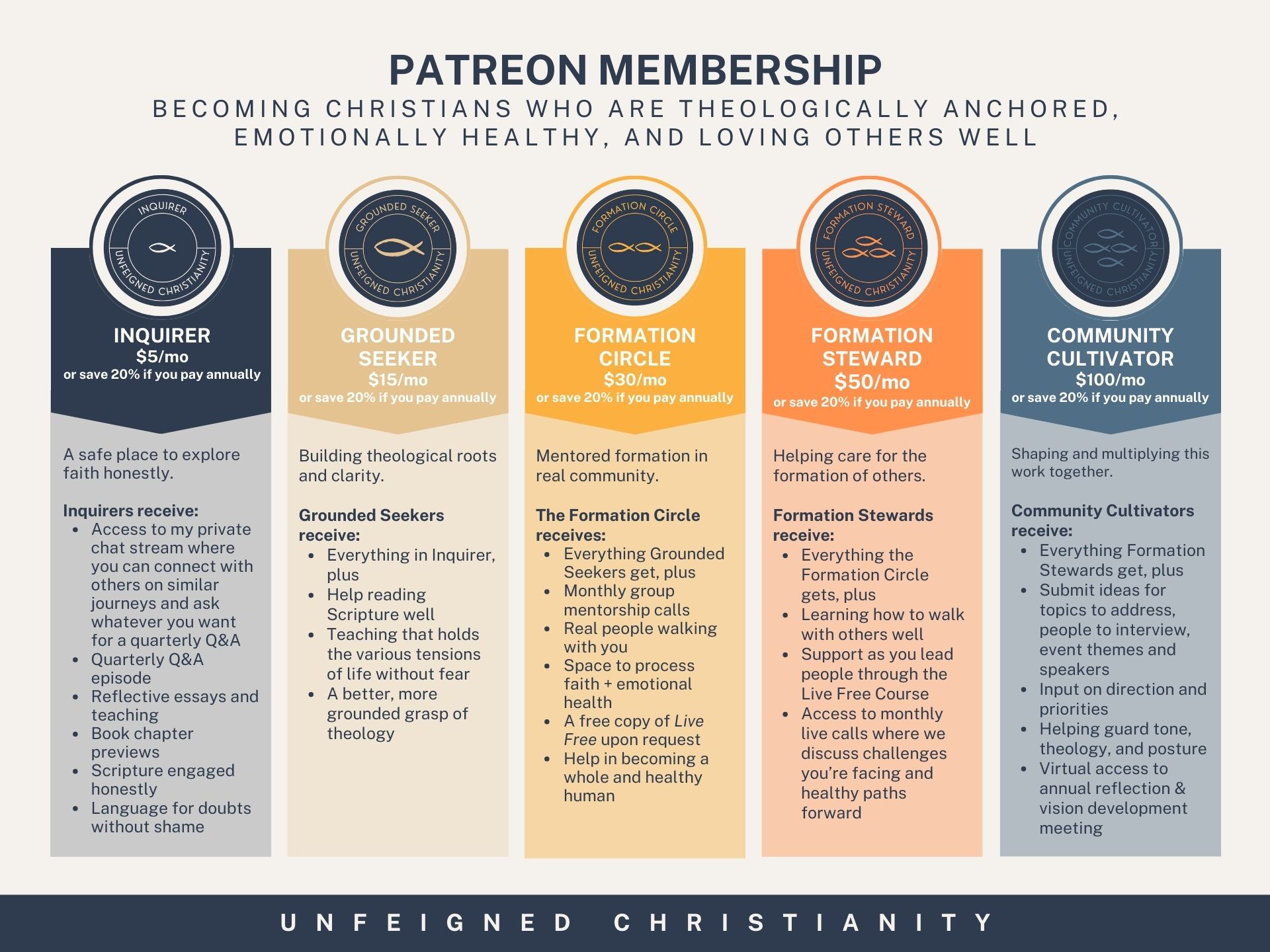
Join Unfeigned Christianity on Patreon and Take Your Journey to the Next Level.
Become a paying member of Unfeigned Christianity for as little as $5/mo and access article, our community chat stream, and quarterly Q&A episodes.
Already a member? Login